

Globally, governments are prioritising interoperable, secure, and inclusive digital infrastructures to deliver public services at scale. The African Union’s Digital Transformation Strategy recognises Digital Public Infrastructure (DPI) as essential for advancing the continent’s social and economic development. Yet, amid the broad digitalisation push, African countries vary widely in terms of technical capacity, regulatory frameworks and adoption rates. Some have already implemented robust systems (e.g., near-universal digital ID programmes), while others remain in the early stages of deploying basic digital tools.
In an increasingly digital world, DPI underpins a nation’s ability to deliver essential services, foster socio-economic growth, and ensure inclusive access to digital systems. Within Africa, commitments to deploy DPIs are driven by goals of improving financial and digital inclusion, modernising government processes, and fostering trust through data protection laws. However, while global DPI frameworks emerge and are increasingly being adopted, careful consideration must be given to local realities, including political economy contexts, infrastructure deficits, and youth specific challenges. As governments worldwide accelerate their digital transformation, it is necessary to examine how local communities, private-sector leaders, and civil society groups shape these infrastructural shifts.
This question around how to understand better local context, led to recent research by Digital Frontiers (this research is not available for general public access) to investigate a landscape of DPI initiatives across thirteen African countries—namely the Democratic Republic of the Congo (DRC), Ethiopia, Ghana, Guinea, Kenya, Madagascar, Nigeria, Rwanda, Senegal, South Africa, Tanzania, Uganda, Zambia, and one region, the West African Economic and Monetary Union (WAEMU). The objective was to understand the priorities, challenges, and successes of DPI ecosystems in each local context.
Fourteen country-level consultants identified 174 DPI champions with varying degrees of influence and DPI familiarity, who together contributed to this landscaping.
What is a DPI Champion?
Champions come in the form of countries, organisations, and individuals. India, Estonia, and Brazil are examples of champion countries. Even the G20’s India, Brazil, and now South Africa have had DPI in focus. The Centre for Digital Public Infrastructure (CDPI), UNDP, Digital Public Goods Alliance, ITU, and GovStack are examples of organisations championing DPI. Nandan Nilekani is a well-known example of an individual DPI champion known globally for work on scaling DPI in India and the rest of the world.
Through this landscaping exercise, we sought to find domestic DPI Champions, defined as people who have influence, are recognised in policy-making circles in at least one specified African country, are currently or likely to be supportive of pursuing the DPI approach in that country, and are willing and able to use their role, platform, and opportunities to advocate for an appropriate DPI approach in the country.
Champions are likely to be drawn from people who currently work in:
- Public sector: at senior levels of relevant government ministries including ICT, Treasury/ Finance or Presidency; or government agencies such as the financial regulator, data protection commission or digital government agency.
- Private sector: in decision-making roles within the financial or ICT sector or trade bodies connected to these sectors.
- Civil society: such as a university, a research body such as a think tank, an NGO, or the media.
Figure 1 shows the distribution of the 174 potential champions identified. The top right quadrant shows the concentration of those with high-level influence, knowledge, and openness to DPI. Overall, 48% of Champions are in Government (22 hold ministerial positions, 37 were senior government officials), 29% are from civil society and 23% are from the private sector.
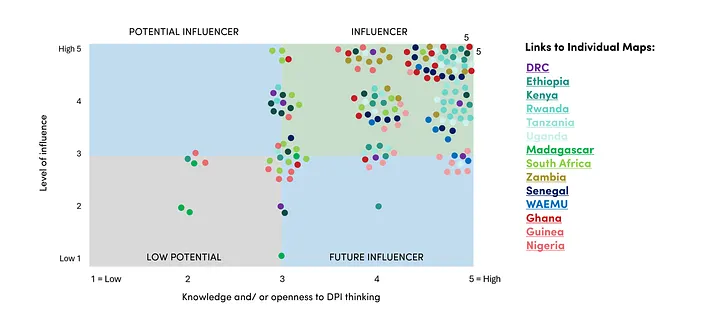
Figure 1: Distribution of the 174 potential DPI champions (Source: Author’s own)
Once identified, the 14 correspondents interviewed these DPI champions to rapidly landscape their countries. The objectives of the landscaping were to:
- Assess the progress of DPI in each country, focusing on key infrastructure pillars (digital identity, instant payments, and data exchange).
- Highlight the perspectives of in-country “champions,” who are the policymakers, private-sector innovators, and civil-society leaders driving DPI efforts.
- Identify common trends and challenges that can inform future policy, investment, and capacity-building interventions.
In less than two months, the network of local correspondents and DPI Champions sourced and shared over 180 resources, including digital transformation strategies for 83% of the countries. 93% of countries provided updates to the DPI Map, and all countries were able to provide updates to the World Bank’s GovTech Maturity Index. Together, these data points created a rich picture of DPI across the continent—rooted in local realities and aligned with global conversations.
Findings
1. DPI Prevalence and Progress
In these DPI landscape countries, there is varying momentum across the three DPI pillars: Digital Identity, Inclusive Instant Payments, and Data Exchange. In all instances, local DPI champions provide a clear perspective on DPI progress and challenges and had differing opinions of what qualifies as a DPI in their contexts.
There is a noticeable acceleration in DPI and DPI-related planning and implementation. The rapid pace of change in awareness and the initiation of new projects is remarkable. To keep up, it seems essential to integrate a diverse array of perspectives and insights from both local and global sources.
Not surprisingly, the landscaping found no fundamental commonality in the sequencing of DPI planning, implementations or use cases; but it did find commonality in challenges and, in many instances, common ideas around solutions. This makes a case to provide a platform for Domestic DPI Champions to network, share progress, and reasoning for why they started where they did. And opportunities to learn how others are addressing challenges, and which solutions have worked.
Digital Identity (DID)
DID deployments include those with high rollout but varying adoption. For example, Nigeria’s National Identity Management Commission reported 118+ million enrolments. However, local champions confirm that adoption in rural areas remains hindered by limited infrastructure, reflecting similar issues found in Ghana’s National Identification Authority rollouts. Nigerian barriers to adoption have been documented as far back as 2021. But, according to local DPI champions, media coverage suggests that difficulties in obtaining identity credentials remain widespread.
Local DPI Champions cite several examples of political and trust factors slowing DID projects, such as in Kenya, where the Huduma Namba initiative was suspended amid data privacy litigation, with civil society groups raising concerns about biometric misuse.
Madagascar is an example of early stage DID initiatives where legislative frameworks exist, but implementation remains hampered by procurement delays.
Instant Payments
The landscaping found many examples of advanced payment ecosystems. The best known is advanced payment ecosystem is probably Kenya’s M-PESA, which has partnered with multiple banks and enabled many other ecosystem players and is cited as handling well over half of the country’s mobile payment transactions. But is M-PESA a DPI? There is an ongoing debate on whether infrastructures that play integral economic roles qualify; local perspectives differ from international views.
Integration and interoperability: In Ghana, Mobile Money Interoperability has allowed seamless transfers between telcos and banks. South Africa’s PayShap platform is interoperable with major banks, but user uptake has reportedly been slow. Meanwhile, Nigeria’s instant payments ecosystem (driven by NIBSS) continues to grow, yet the new eNaira digital currency pilot faces moderate acceptance, especially among older demographic groups.
While payment systems are advanced in several pockets, the landscaping highlighted several ongoing pilots: Senegal is conducting a pilot phase of Système de Paiement Instantané (SPI), with government-to-person (G2P) transfers for social protection, early results indicate reduced transaction times but a need for better agent training.
Data Exchange and Interoperability
The landscaping found several examples of patchwork implementations: Countries in the WAEMU region, for example, attempt cross-border payment and data exchange integration but face difficulties in building shared frameworks. Government statistics from Guinea highlight slow progress in establishing robust data hubs.
There are clear examples of whole-of-government approaches: Rwanda’s Irembo e-portal continues to expand its service array, from birth certificate requests to business registration. Local champions note how Irembo’s layered approach to data sharing across ministries is seen as a model in East Africa.
Security and Privacy: While data protection acts exist in Nigeria, South Africa, Kenya, and Ghana, regulatory enforcement is uneven. In line with the caution expressed by Diana Sang, Jane Munga and Nanjira Sambuli in the Carnegie Endowment paper, local data protection authorities often struggle with limited budgets and staff.
Each of these examples, located on opposite ends of the DPI maturity spectrum, highlights the importance of accepting that one model/approach won’t fit all and that deep consideration of local context and local needs must be given for DPI to progress at a pace.
2. Common Challenges and Differences in Approach
The DPI Champions identified four common challenges slowing the implementation and adoption of DPI in their local contexts. The most common themes are listed below:
- Trust Deficit: In many countries (Kenya, Ghana, Nigeria, as examples), local NGOs (non-governmental organisations) fear government overreach in data collection, while citizens doubt the security of biometric information. And related, Fraud and Security: Across the landscaping, mobile money scams or phishing attempts highlight the need for robust cybersecurity frameworks.
- Capacity Gaps: Both the public and private sectors cite a shortage of skilled professionals who can design, implement, or maintain secure, scalable systems. This challenge is particularly acute in smaller nations like Guinea and Madagascar.
- Lack of Integration and Collaboration between government departments and between government & private sectors, leading to siloed use cases and a duplicating of infrastructure.
- Rural Inclusion: Countries with limited broadband (DRC, parts of Ethiopia) struggle with consistent user engagement or uptake from citizens who need the service most.
There were also notable differences between DPI Champions’ approaches:
- Regulatory Approaches: Ethiopia enacted data protection laws early and published a digital strategy, but practical enforcement is in flux. By contrast, Guinea’s legal frameworks are still in draft form.
Cross-country data reaffirms that establishing trust and robust legal frameworks is vital. - Institutional, Regulatory and Policy Coordination: South Africa’s Interdepartmental Working Group fosters synergy among ministries, while Nigeria’s multi-agency approach isn’t yet clear about which body oversees digital ID.
Per the dataset, countries with a dedicated DPI agency or a centralised task force (e.g., Rwanda, Uganda, and recently South Africa) see faster rollouts. Continuous engagement with civil society can prevent conflicts that derail implementation. - Adoption Speed: DPI Champions report private-sector solutions gain traction faster, whereas countries like Senegal rely heavily on public-sector-driven payment pilots.
- Regional Integration: WAEMU’s pursuit of cross-border payment systems and data exchange exemplifies the potential for synergy. However, uneven national adoption of data protection or e-transaction laws complicates cross-border DPI scale-up.
3. Role of Domestic Champions in Contributing to a Broader Understanding of DPI
Creating greater synergy between local realities and globally proposed DPI frameworks is pivotal. For example, this landscaping of local research and domestic DPI champions’ perspectives, aligns with the insights from Sang, Munga, and Sambuli: Digital Public Infrastructure: A Practical Approach for Africa—that high-level concepts must be tailored to each country’s infrastructure readiness, political economy, and cultural contexts.
Domestic DPI Champions have influence, are recognised in policy-making circles, are supportive of pursuing the DPI approach, and are willing and able to use their role, platform, and opportunities to advocate for an appropriate DPI approach in the country.
Local champions in Ethiopia and Rwanda highlight success stories in bridging government and community acceptance. Meanwhile, champions in Nigeria and Kenya cite the importance of clarifying the business case for DPI to private stakeholders.
Ensuring that champion networks share knowledge regionally could accelerate best practices continent-wide. These perspectives and the varying insights shared in previous sections highlight the importance of local context to globally proposed DPI frameworks.
Conclusion and Recommendations
Progress varies significantly: Adoption rates differ for digital ID, instant payments, and data exchange. Some countries have advanced significantly, while others face structural and legislative roadblocks. Similarly, needs in local contexts vary. Which leads us to conclude that domestic DPI Champions need to augment global DPI frameworks (architectures, use cases, implementation guides and policy guidelines, etc.) with deep local contextualisation, strategies, and implementation support.
Policy and Regulatory Enablers: The formal adoption of data protection, e-signature laws, and national digital strategies helps anchor DPI efforts and secure buy-in from both public and private stakeholders. Similarly, implementations of these in their local contexts are thin and often irrelevant to the most vulnerable beneficiaries. Which leads us to conclude that global best practice in DPI enabling policy needs to be augmented with the inclusive realities of local market contexts.
Trust and Capacity: Building trust—through anti-corruption measures, transparent governance, and robust cybersecurity—must go hand in hand with investments in technical and institutional capacity building. The technical capacity to design, implement and manage DPIs was absent in all countries we landscaped, and must go beyond the initial road-map work in stimulating DPI commitments.
Local Champions Matter: In each of the above, sustained DPI momentum depends on the effective engagement of local champions who understand the technologies, local culture and adoption dynamics. Each country will continue to be different in its DPI approach and the relevance of DPIs to its citizens.
This experience of engaging with local champions leads us to conclude that domestic DPI Champions should be given voice and a platform to share, learn, solve, and accelerate DPI, as an integrated part of the global DPI movement.
Written by Lisa Forte (Head: Corporate Services, Digital Frontiers) and Gavin Krugel (Executive Director, Digital Frontiers)
– – – – –
How Insights Were Gathered: Behind the Research
Digital Frontiers developed this landscaping in collaboration with a team of correspondents and DPI champions from 13 African countries and the WAEMU regional block. Integral: Governance Solutions and The Gates Foundation provided oversight and funding for the work.
To understand how DPI is evolving across Africa, the team used a multi-pronged research approach that blended quantitative data, local voices, and policy analysis.
They began with a custom-built Excel database, compiling key indicators across the countries. This included the status of digital identity systems, instant payments, data exchange mechanisms, and policy frameworks—alongside local news links and case studies that brought real-world and recent context into focus. The data was compared to two global observatories: the DPI Map from UCL IIPP and the World Banks GovTech Index.
Complementing this was a PowerPoint summary from a rapid landscaping exercise, showcasing statistics, country profiles, and stakeholder quotes to highlight emerging patterns and trends in DPI adoption.
Central to the research were interviews with over 40 (of the 174 identified) local DPI champions—carefully selected leaders from government, private sector, and civil society. These individuals were identified through in-country expert networks and vetted for their influence, insights, and regional representation. Their perspectives shed light on what’s working, what’s not, and what’s next.
The team conducted semi-structured interviews (via phone, video or in-person), exploring topics such as digital ID coverage, interoperability, legislative hurdles, connectivity challenges, and inspiring local success stories. These conversations helped surface both country-specific nuances and cross-cutting themes.
To ensure a holistic view, we also drew from secondary sources, including government strategies, international policy papers, and recent thought leadership.
– – – – –
Article originally shared on Medium.com on 15 May 2025