

International Women’s Day often brings a wave of statistics. Globally, the presence of women in leadership roles has grown steadily. Yet, according to multiple sources, there is still considerable room for improvement: women hold only 33.5% of senior leadership positions, just 23.3% of board seats worldwide, and only 18% of senior leadership roles have global representation of women. Progress is evident, but it remains uneven across regions and sectors.
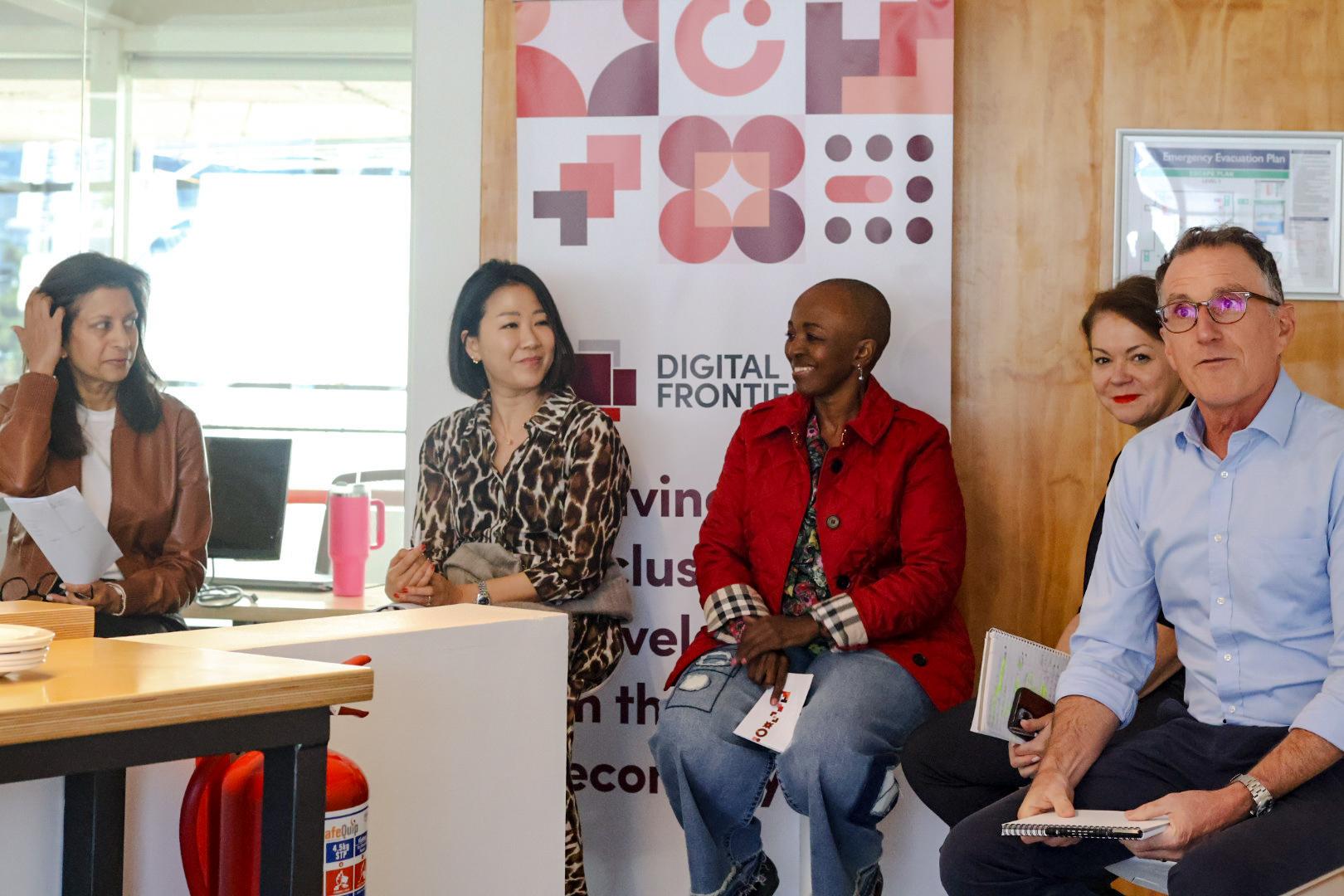
Figure 1: Alka Gupta, Sung Ah Lee, Ndumi Ketwa, Kate Bravery and Todd Malone share their feedback on their annual strategy meeting, in our Digital Frontiers office at Workshop17, Watershed in Cape Town, South Africa
At Digital Frontiers, our board is currently comprised entirely of women: Alka Gupta (board chairperson), Ndumi Ketwa (audit and risk committee chair), Sung Ah Lee (vice-chairperson) and Kate Bravery (people and remuneration committee chair) with the exception of Todd Malone’s mandatory seat as Chief Executive Officer (CEO). Digital Frontiers worked hard to find the right expertise and judgment to guide an organisation operating at the intersections of financial services, climate, regulation, impact, human capital, and ecosystem development. We also sought people whose values ensure we remain mission-aligned. While representation may stand out to some, what stands out to us is the quality of our governance.
“Our board challenges assumptions. They probe risk. They press on financial discipline and long-term sustainability. They support the organisation while holding it accountable. In every sense, they strengthen institutional credibility. And I would like to think they make me a better CEO,” says Todd Malone.
There is also a distinct way in which complex issues are addressed. Conversations rarely reduce challenges to simple, linear problems. Instead, our board explore trade-offs and interdependencies, always considering long-term consequences. For an organisation focused on systems change and institutional capability, this depth of perspective is foundational to our work.
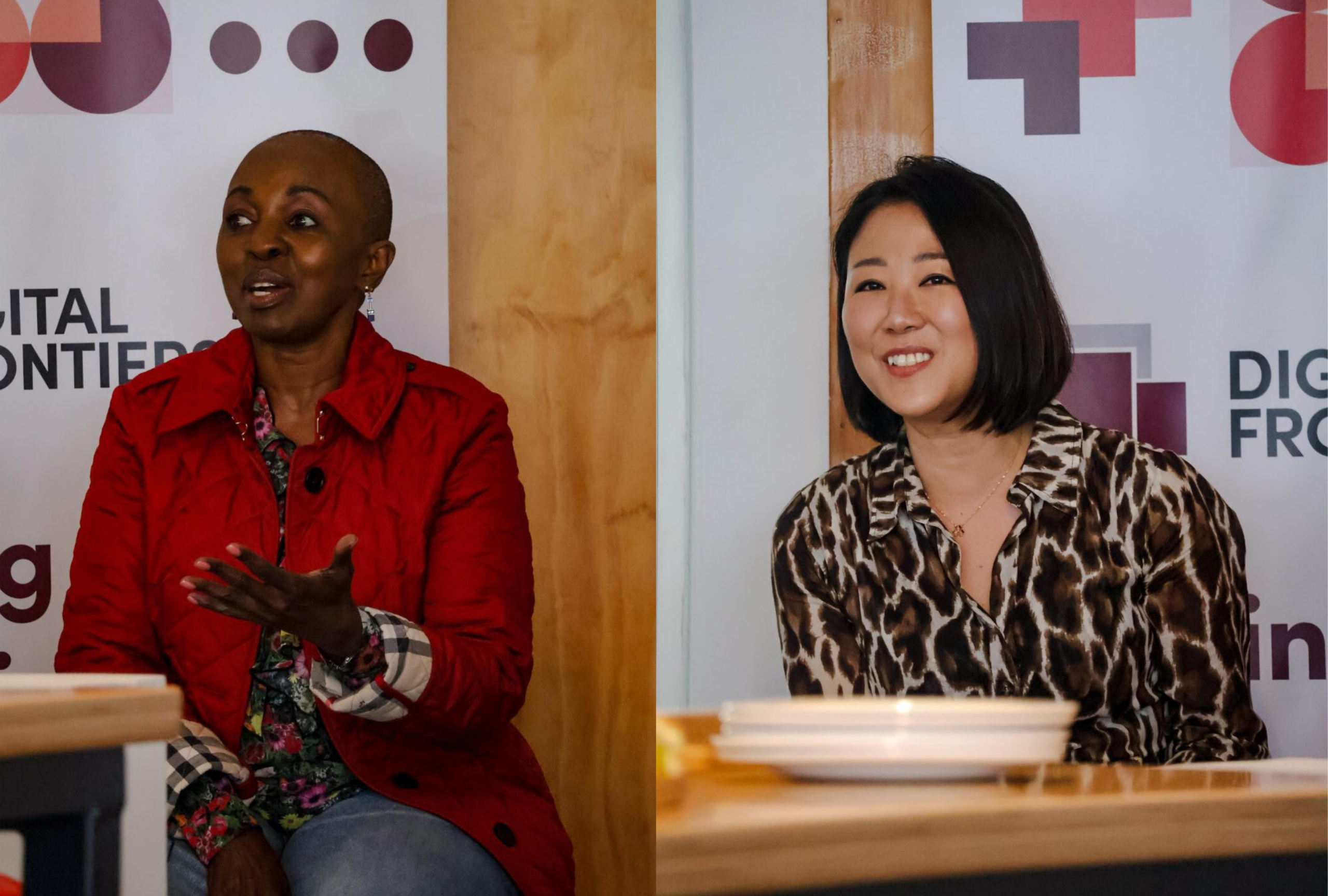
Figure 2 and 3: Ndumi Ketwa and Sung Ah Lee share their experience with the Digital Frontiers team in January 2026
Global research consistently shows that diverse boards are associated with stronger oversight and better long-term performance. Increasingly, companies recognise that different perspectives lead to better governance and more innovative thinking, and a key driver of this shift is the rise of female board members (The Veblen Director Programme). Our experience reflects this evidence. Diversity is not symbolic; it is structural. An all-women board should not be unusual. It should simply be possible. Leadership tables are strongest when they reflect the diversity of talent in the markets and communities they serve.
In The Importance of Gender Diversity in the Boardroom, by Mary Fetherolf highlights that inclusion is essential by quoting inclusion advocate and former Vice President of Inclusion Strategy at Netflix, Vernā Myers, “Diversity is being invited to the party; inclusion is being asked to dance.” For gender diversity to be fully realised in the boardroom, directors need to adopt practices that ensure all voices are heard and able participate equally.

Figure 4: Digital Frontiers’ Board of Directors
On this International Women’s Day, we recognise both the progress achieved and the work still ahead. Effective, values-driven leadership remains the goal. We are fortunate to experience that with our amazing, globally minded board.
Written by Todd Malone (Chief Executive Officer) and Bryanah Kirsten Marais (Communications and Content Specialist)